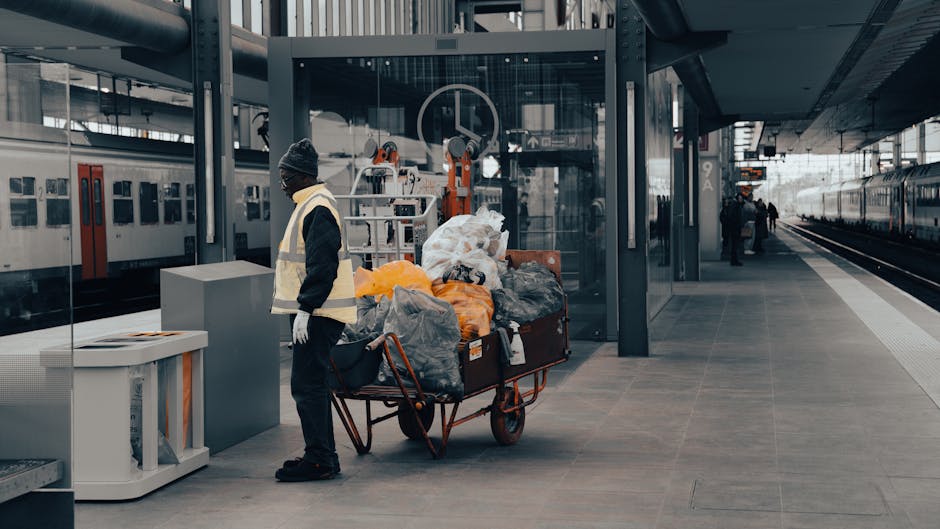
Waterloo Station rubbish removal access guide
If you are planning rubbish removal near Waterloo Station, access can matter just as much as the waste itself. Busy roads, tight loading space, pedestrian flow, bus lanes, station activity, and the plain old headache of central London logistics can all slow things down if you do not plan properly. This Waterloo Station rubbish removal access guide breaks the whole process down in clear, practical terms so you know what to expect, what to prepare, and when a different service may be the smarter option. Truth be told, a lot of removal jobs go wrong not because the waste is difficult, but because the access is.
Whether you are clearing a flat, dealing with office waste, managing builders' debris, or just trying to get a pile of unwanted items out of the way without disrupting neighbours or road users, this guide will help you make a better decision. It also points you towards useful related services such as professional rubbish removal in Waterloo, wait and load skip hire, and skip hire permits where they fit the job.
Why Waterloo Station rubbish removal access guide Matters
Waterloo is not the kind of place where you can simply pull up, load up, and head off with no fuss. Around the station, access is shaped by traffic volume, narrow approach routes, pedestrian movement, and the reality that one awkwardly parked vehicle can create a chain reaction. If you are removing rubbish from a home, office, shop, or building site nearby, access planning helps avoid delays, extra costs, missed collections, and frustrated neighbours. It also keeps the job safer for everyone involved.
In practical terms, access issues can affect:
- how close a vehicle can get to the waste
- how far items need to be carried
- whether a smaller vehicle is needed
- how long the collection takes
- whether loading needs to happen at a specific time of day
That last point is easy to overlook. A job that seems straightforward at 9 a.m. can become awkward by mid-morning when the streets are busier, the pavements fuller, and everyone is in a hurry. So the access guide is not just a nice-to-have; it is the part that makes the rest of the job work smoothly.
For more specialised waste jobs, the access question matters even more. Builders' waste, office clear-outs, and mixed bulky items often need a more tailored method. You may find it useful to compare builders skip hire with grab hire services or man and van clearance depending on the site layout.
How Waterloo Station rubbish removal access guide Works
Think of the access guide as a simple decision tool. First, you assess the location. Then you match the waste type and volume to the best removal method. Finally, you plan the loading route, timing, and any permissions or safety measures that may be needed. It sounds obvious written out like that, but in real life people often skip straight to booking before checking whether the vehicle can actually reach the property comfortably. That is where the trouble starts.
1. Assess the access
Look at the route from the nearest practical stopping point to the waste. Ask yourself: is there room to stop safely? Is there a gate, stairwell, lift, courtyard, basement, or service yard involved? Is the route flat or full of steps? Are there timed restrictions, bollards, concierge rules, or loading constraints? Those details shape the whole job.
2. Match the method to the site
If the vehicle can park close and the waste is easy to load, a standard collection may work well. If parking is tight or the access is short and urgent, a wait and load skip hire solution can be more practical. If the items are bulky but manageable, rubbish removal or man and van services may be a better fit.
3. Confirm any constraints
Some jobs near Waterloo Station need extra care around permits, access windows, or busy delivery periods. A permit may be relevant in some cases, especially if a vehicle or skip needs to be placed on the highway for any length of time. If the access is too restricted for a conventional skip, it may be more sensible to consider skip permits and skip hire as part of a broader plan rather than treating them as separate decisions.
4. Load safely and finish cleanly
Once the access plan is settled, the collection itself should be orderly: clear the route, separate restricted waste, load efficiently, and leave the area tidy. A good team will work fast without rushing in a careless way. There is a difference. You can usually feel it within the first five minutes.
Key Benefits and Practical Advantages
A good access plan saves more than time. It protects the job from friction, and in central London that is worth a lot. Here are the main advantages people notice first.
- Less disruption: fewer awkward pauses, fewer blocked pathways, and less impact on neighbours or nearby businesses.
- Better cost control: when access is understood properly, you are less likely to pay for repeat visits or avoidable delays.
- Safer loading: fewer risky lifts, fewer improvised carrying routes, and lower chance of damage.
- Faster completion: jobs near Waterloo Station often run on tight timing, so shaving off ten minutes matters.
- Better choice of service: once you know the access conditions, it is easier to choose between skip hire, wait and load, grab hire, or a van-based collection.
There is also a quieter benefit: peace of mind. If you have ever watched a collection unfold while wondering whether the lorry is too big for the street, you will know the feeling. A clear access plan removes that background worry.
For larger or more varied waste loads, it can help to review skip sizes and prices alongside what can go in a skip, especially if you are deciding whether to combine items or split them into separate collections. Sometimes the neatest answer is not the biggest vehicle; it is the right one.
Who This Is For and When It Makes Sense
This guide is useful for anyone dealing with waste near Waterloo Station, but some readers will find it especially relevant.
Homeowners and tenants
If you are clearing out a flat, replacing furniture, or tackling a post-renovation pile, access may be your biggest constraint. Shared entrances, stairwells, and limited roadside stopping can make a simple job a bit fiddly. In those situations, small-load rubbish removal or man and van services can be more practical than a larger skip.
Landlords and letting agents
End-of-tenancy clearances often come with time pressure and, let's face it, mixed-quality leftovers. Mattresses, broken chairs, bags of odds and ends, and the occasional surprise item tucked behind a cupboard. If access is tight, planning the route beforehand prevents a last-minute scramble.
Offices and commercial premises
Office clearance near a major transport hub needs to be efficient and discreet. You may want to minimise noise, limit the time in shared corridors, and avoid disrupting staff or customers. Office clearance and commercial skip hire are both worth considering depending on volume and access.
Builders and contractors
Construction and refurbishment work around Waterloo can generate awkward waste mixes: plasterboard, timber, packaging, broken fixtures, and general debris. If the site is tight, construction waste disposal or construction waste clearance may be the smoother choice. For heavier material, grab-based solutions can save a lot of manual handling.
When it makes sense to use this guide
- before booking a collection near the station
- before ordering a skip for a constrained street
- when you need to check whether a permit may be needed
- when items need to be carried through a building rather than loaded from the front
- when timing is tight and you cannot afford a failed visit
Step-by-Step Guidance
If you want the most practical version of the Waterloo Station rubbish removal access guide, use this sequence. It is simple, but it works.
- Measure the route. Check the distance from the nearest stopping point to the waste. Count steps. Look for barriers. Note tight corners and narrow entrances.
- Identify the waste type. Mixed household waste, office furniture, construction debris, garden waste, or bulky items all behave differently on site.
- Estimate the volume. A small pile can still be awkward if it is spread over several rooms. A larger pile in one room may be easier to move. Funny how that works.
- Check access time windows. Some locations are easier early in the day, before traffic and footfall build up. Mid-afternoon can be a mess, honestly.
- Decide on the best method. Choose between skip hire, wait and load, grab hire, man and van, or full rubbish removal.
- Review restricted items. If your load includes appliances, confidential material, or anything that may need special handling, separate it before the team arrives.
- Prepare the load point. Clear loose trip hazards, open gates, and make sure someone can point out the items clearly.
- Confirm who is responsible for what. If the job involves a building, office, or managed property, clarify access permissions, lift use, and any building rules.
A useful trick is to walk the route once while carrying a light empty box or bag. It gives you a better feel for the route than staring at a plan ever will. You notice the little things: a sticky door, a low beam, the awkward turn at the end of a corridor. Those tiny details are the ones that slow things down.
Expert Tips for Better Results
After enough collections, you start to notice the same patterns. The jobs that go smoothly usually have the same features: clear instructions, sensible timing, and no surprises hiding in the back room.
- Photograph the waste and the access route. A few pictures can save a lot of back-and-forth. Include stairs, gates, parking points, and the actual rubbish.
- Separate awkward items early. Mattresses, white goods, confidential paper, and mixed construction debris are easier to handle when they are not buried in a general pile.
- Use the quietest practical time slot. In busy central areas, early collections often feel calmer and less stressful.
- Keep the route clear. A wheelie bin, pram, or stack of boxes in the wrong place can turn a simple carry into a minor obstacle course.
- Choose capacity carefully. Bigger is not always better. If access is restricted, a smaller vehicle or a more flexible service can be far more efficient.
- Ask about restricted waste before it becomes a problem. If you suspect you have hazardous items, do not leave it to chance.
One small but important point: if you are dealing with a flat above street level, factor in the return journey as well as the first carry out. It sounds obvious, but people forget. The first load feels manageable; the tenth does not.
For more background on specialist disposal, it can help to review fridge and appliance removal, mattress and sofa disposal, and confidential shredding if your clearance includes items that should not just be tipped into a mixed load.
Common Mistakes to Avoid
Most access problems are preventable. The difficult part is that they often look small on paper and annoying in real life.
- Booking before checking access. If a vehicle cannot get close enough, the plan changes fast.
- Underestimating carrying distance. Ten metres becomes fifty when you need repeated trips through narrow hallways.
- Forgetting building rules. Some properties have loading bay restrictions, lift booking rules, or concierge requirements.
- Mixing prohibited items into the load. That creates delays and may require a separate collection.
- Assuming all waste is the same. Mixed waste needs more thought than a single category load.
- Ignoring permit or placement issues. If the job involves putting a container on the public highway, permissions matter.
There is also the classic mistake of leaving access details until the last five minutes. That is how jobs become stressful for no good reason. If you are unsure, say so early. It is much better to ask a slightly awkward question than to deal with a delayed truck and a very annoyed neighbour at 8:30 in the morning.
Tools, Resources and Recommendations
You do not need specialist equipment for every job, but a few simple tools make a big difference.
Useful preparation tools
- Tape measure: useful for checking gate widths, corridor widths, and load sizes
- Phone camera: photographs help explain the site and waste mix clearly
- Gloves and sturdy footwear: sensible basics when shifting boxes or broken items
- Labels or tape: handy for marking items that must stay separate
- Notepad: still surprisingly useful for access instructions, gate codes, and timing notes
Service recommendations by scenario
If you need a straightforward domestic clear-out with manageable access, domestic skip hire may be appropriate. If you are working on a building site and waste is piling up quickly, look at builders waste removal or builders skip hire. If the site is especially tight, a grab-based option such as grab lorry hire can reduce manual moving.
For awkward items or larger mixed loads, the comparison between rubbish removal and wait and load skip hire is often the decisive one. Both can work well. The right choice depends on whether access favours fast loading on the spot or a more flexible collection approach.
Law, Compliance, Standards, or Best Practice
Any rubbish removal job should be handled with care, and in London that includes being aware of basic legal and safety expectations. You do not need to become an expert overnight, but you do need to stay on the right side of common-sense compliance.
Best practice usually includes the following:
- Waste must be handled responsibly. Mixed loads should be sorted where required, and restricted materials should not be treated like general rubbish.
- Access should not create a danger. Blocking pavements, loading in unsafe conditions, or moving heavy items carelessly can create avoidable risk.
- Site rules matter. Managed buildings, commercial premises, and private developments often have their own procedures for access and loading.
- Documentation and payment should be clear. Good service providers explain what is included, what is not, and how the job will be priced.
- Environmental handling should be sensible. Recycling and reuse are better outcomes where possible, especially for mixed but salvageable waste.
If you are dealing with anything that could be classified as hazardous, do not assume it can go with ordinary waste. Use proper handling pathways and make sure the provider understands the item type before arrival. That bit matters. A lot.
You may also want to review practical policy pages such as health and safety policy, insurance and safety, and recycling and sustainability if you want a better sense of how a responsible service is run.
Options, Methods, or Comparison Table
The best method depends on access, waste type, urgency, and how much labour you want to avoid. Here is a simple comparison to help you narrow it down.
| Method | Best for | Access considerations | Typical strengths |
|---|---|---|---|
| Rubbish removal | General household, office, or mixed bulky items | Works well where access is limited but a team can carry items out | Simple, flexible, quick |
| Wait and load | Short-stay parking or loading windows | Useful where long placement is not practical | Good for busy streets and tight time slots |
| Skip hire | Projects with enough space for placement | May need permit support or careful siting | Handy for ongoing clearances |
| Grab hire | Heavy or loose waste, builders' debris, soil, hardcore | Needs workable roadside reach but less manual loading | Fast for bulky and awkward materials |
| Man and van | Smaller loads, lofts, flats, one-off clearances | Useful where stairs or narrow access make larger vehicles awkward | Personal, efficient, adaptable |
If you are deciding between methods, think less about the headline service name and more about the real-world job. Where does the waste sit? How far does it need to travel? Is there room for a vehicle to wait safely? Those questions usually point to the answer faster than the price list does.
Case Study or Real-World Example
A small office near Waterloo Station needed to clear old desks, filing cabinets, boxed paperwork, and a broken fridge from a back room accessed through a narrow corridor and a service lift. At first glance, the team thought a standard skip might be easiest. But once they looked at the route and the building rules, the picture changed. The lift needed booking, the road space outside was tight, and there was no practical area to leave a container for long.
They switched to a flexible collection plan using a combination of office clearance and a short-loading service. The removal team arrived early, parked in the most workable position, moved items in stages, and stayed within the building's access rules. The job was completed without blocking the corridor for longer than necessary, and the office could reopen the cleared room the same day.
The lesson was simple: the first service idea was not the best service idea. Once access was examined properly, the whole job became easier. That happens a lot in central London, to be fair.
Practical Checklist
Use this before you book anything.
- Have I checked the access route from the waste to the vehicle?
- Do I know whether there are stairs, narrow doors, lifts, gates, or locked areas?
- Is there a safe stopping or loading point nearby?
- Have I estimated the waste type and approximate volume?
- Do any items need special handling, such as appliances or confidential material?
- Could a permit or restricted placement issue apply?
- Have I chosen the right service type for the access conditions?
- Are building managers, neighbours, or staff aware if they need to be?
- Have I cleared trip hazards from the loading route?
- Do I have photos ready in case I need to explain the site quickly?
If you can tick most of those off, you are in good shape. If several are unknown, slow down and clarify them first. It usually pays off.
Get a free quote today and see how much you can save.
Conclusion
A Waterloo Station rubbish removal access guide is really about making sensible decisions before the collection day arrives. The closer you are to Waterloo Station, the more access affects time, safety, and cost. A good plan helps you choose the right service, avoid last-minute stress, and get the job done without turning a simple clearance into a logistical drama.
If you remember nothing else, remember this: check the route, match the method, and keep restricted items separate. Everything else becomes much easier from there. And when the waste is finally gone, the space feels lighter in a way that is oddly satisfying. Clean floors, open corners, no clutter. Nice.
For deeper planning, you can also explore pricing and quotes, book online, or learn more about the company on the about us page if you want to understand how the service is run.
Frequently Asked Questions
What is the main challenge with rubbish removal near Waterloo Station?
The biggest challenge is usually access rather than the waste itself. Busy roads, foot traffic, limited stopping space, and building restrictions can all affect how a collection is completed.
Do I need a permit for rubbish removal near Waterloo Station?
Not always. It depends on whether a skip or vehicle needs to occupy the public highway and for how long. If you are unsure, it is worth checking permit needs before booking.
Is wait and load better than skip hire in central London?
Often, yes, if parking or placement space is limited. Wait and load can be more practical where a skip cannot be left in place for long or where access is too tight for a standard drop-off.
Can I use rubbish removal for bulky items like sofas and mattresses?
Yes, bulky items are commonly removed this way. For specific items, it may help to review dedicated services such as mattress and sofa disposal or appliance removal before booking.
What if my waste is in a basement or upper-floor flat?
That is very common around Waterloo. The key issue is the carrying route. Stair access, lifts, corridor width, and the number of trips all affect the best service choice.
How far in advance should I plan the collection?
For simple jobs, a short lead time may be enough. For restricted access, building-managed sites, or busy commercial areas, planning earlier gives you more flexibility and fewer surprises.
Can a grab lorry help with awkward access?
Yes, especially for heavier waste, loose materials, or jobs where you want to reduce manual loading. It is not the answer for every site, but it can be a very efficient one.
What kind of access information should I send before booking?
Send photos, gate widths, stair details, floor level, loading point information, and any restrictions such as timed access or concierge control. The more practical detail you give, the better the planning.
Is same-day rubbish removal possible near Waterloo?
Sometimes it is, depending on availability, access, and the type of waste. If the job is urgent, a same-day option can be useful, but only if the access details are clear from the start.
What should I do with hazardous or restricted waste?
Do not mix it with general rubbish. Set it aside and check the correct disposal route first. Restricted items need proper handling, and guessing is not a good plan here.
How do I know whether to choose skip hire or a van-based collection?
If you have space for a skip and a longer clearance window, skip hire may suit you. If access is tight, the load is smaller, or you need a quicker turnaround, van-based collection or wait and load may be better.
Will the team remove everything in one visit?
Usually yes, if the access and waste details were described accurately. The main reason a job needs a second visit is when the load was underestimated or the route turned out to be more limited than expected.
For any final questions about a specific site or access problem, you can use the site's contact us page to discuss the job directly. A quick conversation can save a surprising amount of hassle later.